- The Option Premium
- Posts
- The Danger of Chasing Volatility: Why Timing Matters More Than Strategy in Options Selling
The Danger of Chasing Volatility: Why Timing Matters More Than Strategy in Options Selling
High IV pays sellers who arrive after fear peaks and punishes those who arrive during it. The timing framework, with a fully worked two-seller case study.
The Danger of Chasing Volatility: Why Timing Matters More Than Strategy in Options Selling
Many traders focus on high IV trades but forget the critical role timing plays in capturing premium without excess risk. Here is how to avoid the trap.
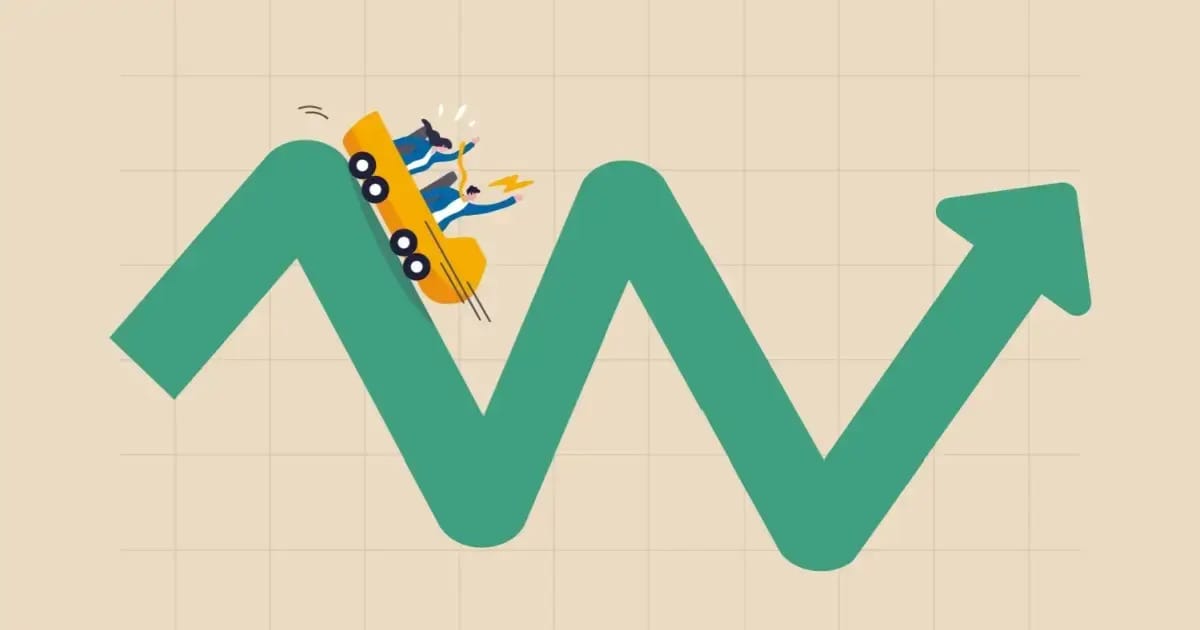
In the options world, elevated implied volatility is often treated as a gift. More juice for the squeeze, right?
High IV environments do offer larger premiums. They also carry larger risks, and too many traders jump into juicy credit spreads or short puts without understanding the timing dynamics underneath. This article breaks down why chasing volatility backfires, and how to think more intelligently about timing your premium-selling entries, especially when IV spikes.
What Traders Get Wrong About High IV
An IV Rank of 40 tells you that current implied volatility is elevated relative to its own past year. It does not tell you that you are entering a good trade. Three misconceptions do most of the damage.
High IV Rank is not the same as an ideal entry. An IV Rank of 90 sounds enticing, but the question that matters is different: is volatility still expanding, or has it already peaked? The rank measures where you are; it says nothing about which direction the vol itself is traveling.
A late entry makes you the liquidity. If volatility has already surged and you are selling puts or condors after the spike, you are selling into a crowd that includes panic hedgers, volatility chasers, and algorithmic models programmed to fade the same setup. The premium looks rich precisely because the risk is being repriced in real time.
The volatility cycle is reflexive. Volatility begets more volatility, until it does not. Most traders remember the reversion tendency and forget the expansion phase that precedes it, and vol collapses are only profitable if you were positioned before the collapse rather than run over during the expansion.

The rank tells you where volatility stands, not where it is going. The distance between those two facts is where chasers get hurt.
The Timing Case Study, With Numbers
Consider an illustrative volatility event on a broad market ETF. Over three sessions the ETF falls 6 percent, from $600 to $564. IV Rank jumps from 22 to 76 as implied volatility expands from 18 percent to 30 percent. Premium sellers rush in. Here is how three different entries play out.
The during-spike seller acts on day three, while the market is still falling. With the ETF at $564 and IV at 30 percent, the expected move for the next 35 days is roughly $52, putting the floor near $512. They sell the $515 put at a 0.25 delta and collect a rich-looking $5.50. The next session the ETF drops another 2.5 percent and IV expands to 36 percent. Delta and vega both work against the position at once, and the put marks near $12, a loss of more than one full credit in a single session. The stop rule (close at one to two times the credit received) triggers the day after entry. The premium was large; the timing made it exposure.
The patient seller waits for reversal clues instead. Two sessions later the ETF has stabilized in the $555 to $560 range, capitulation volume has printed, and IV has peaked at 36 percent and started ticking down. With the ETF at $558 and IV at 33 percent, the expected-move floor sits near $501. They sell the $500 put at a 0.20 delta for $4.60, 35 days out, with the strike below the market's own expected range. Over the next two weeks the ETF drifts up to $570 while IV contracts toward 24 percent. Theta and the volatility crush pull in the same direction, the put decays toward $1.15, and the position is closed at 75 percent of maximum profit per the standard rule.
Same event, same strategy, similar strikes. The difference between a stopped-out loss and a clean win was a few sessions of patience.
Selling premium into stabilizing volatility gives you edge. Selling into expanding volatility gives you exposure. And the history of past panics repeats the same lesson: the richest opportunities came just after the peak of fear, not during its acceleration.

Same event, same strategy. The during-spike entry loses a full credit in one session; the patient entry captures theta and the vol crush together. The variable was timing.
A Smarter Volatility Framework
Start with a three-lens view. IV Rank and IV percentile tell you whether premiums are relatively rich. RSI across multiple lookbacks, the two-day, seven-day, and fourteen-day readings, tells you whether the underlying is stretched and whether the momentum is young or dying; the ChartSchool reference on RSI covers the mechanics. And breadth and momentum conditions tell you whether the move is broad-based or isolated to a handful of names, which changes how much trust the signal deserves.
Then look for reversal clues before entering. Put-call ratios above 1.5 signal that hedging demand has reached extremes. A VIX rise of more than 20 percent inside three sessions marks an acceleration phase that usually needs to exhaust before selling is safe. And capitulation volume, the heaviest selling of the decline arriving with a failure to make meaningful new lows, is the classic sign the crowd has finished.
Finally, stagger the entry with smaller size. Scale into positions as the market begins to stabilize rather than going all-in at peak fear. If the first tranche is early, the remaining capital buys better strikes at better volatility. Position sizing does not just manage risk; it buys you the right to be early without being wrong.

Three lenses to read the environment, three clues to time the turn, and staggered size so being early costs an adjustment instead of an account.
Common Mistakes in High-Volatility Trading
Let's make this brutally clear. In volatility events, traders routinely sell puts on the first down day without confirmation. They ignore RSI extremes that say the move is young. They sell iron condors into expanding IV without respecting what expansion does to both sides at once. They get greedy on premium and widen spreads beyond what their sizing rules support. And they forget that liquidity dries up exactly when they need to adjust, so the bid-ask spread that looked tolerable at entry becomes a tax at the worst possible moment.
None of this argues for avoiding premium. It argues for knowing when the premium is compensation and when it is bait.

Five ways the same rich premium becomes a trap. Every one of them is a timing error wearing a strategy costume.
The Professional Combination: Structure Plus Timing
Structure the trade from the chart and the volatility regime. Shorter-duration credit spreads earn their keep when volatility is high, because elevated IV pays quickly and the position spends less time exposed. Longer-duration positions like poor man's covered calls fit low-volatility regimes, where you are buying time cheaply rather than selling fear dearly.
Time the entry from the evidence. RSI position across timeframes, IV percentile direction, and signs of price exhaustion. The structure decides what you trade; the evidence decides when.
Manage proactively, not reactively. Adjust or close based on new volatility data, not on emotion. The volatility regime that justified the entry is a living input, and when it changes, the position's math changes with it, whether or not the P&L has moved yet.

Structure answers what, evidence answers when, and management answers what now. Strategy alone only ever answers the first question.
Strategy Alone Is Not Enough
You can have the right strategy and still lose if your timing is wrong. In premium selling, we are not rewarded for showing up. We are rewarded for showing up when the odds are mispriced, and the odds are mispriced most reliably just after fear peaks, not while it is still building.
That is what The Option Premium is built on: high-probability setups combined with smarter timing, smarter sizing, and disciplined management. The premium is always on the screen. The edge is in the calendar.
Trade Smart. Trade Thoughtfully.
Andy Crowder
🎯 Ready to Elevate Your Options Trading?
Subscribe to The Option Premium—a free weekly newsletter delivering:
✅ Actionable strategies.
✅ Step-by-step trade breakdowns.
✅ Market insights for all conditions (bullish, bearish, or neutral).
📩 Get smarter, more confident trading insights delivered to your inbox every week.
📺 Follow Me on YouTube:
🎥 Explore in-depth tutorials, trade setups, and exclusive content to sharpen your skills.
📘 Join the conversation on Facebook.
Reply